Start by measuring the real changeover
Changeover time runs from the last good piece of one job to the first good piece of the next. Not the moment the new screen goes on, not the moment the new file loads: last good to first good. That definition catches the hidden parts: finding the fixture, adjusting it, printing test pieces, waiting for approval and scrapping the misses.
Time three or four real changeovers with a stopwatch and a notepad. Write down every step and who does it.
Most teams are surprised by how much of the total is searching, walking and waiting rather than the technical change itself.
Where changeover time hides
- 01
Tooling
Screens, plates, pads and clichés that must be made, mounted, registered and cleaned for every design.
- 02
Fixtures and mandrels
Holding hardware that has to be found, swapped and adjusted when the shape or size changes.
- 03
Ink and color
Ink changes, color matching and purging when a job needs different inks.
- 04
First-article approval
Test prints, measurements and sign-offs before production can start.
- 05
Material staging
Blank product, artwork, labels or sleeves that are not at the line when the change begins.
- 06
Cleanup
Cleaning heads, screens, fixtures and work areas from the last job.
Apply the SMED playbook
Single-Minute Exchange of Die (SMED) is a lean manufacturing method built for exactly this problem, and it translates well to decoration:
- Separate internal from external work. Internal steps can only happen while the line is stopped. External steps can happen while the previous job is still running: staging product, loading files, presetting fixtures.
- Convert internal to external. Preset the next fixture off line. Proof artwork before the change, not during it.
- Streamline what remains. Replace adjustment with location: pins, stops and quick-release clamps that put a fixture in the right place the first time.
- Standardize and document. A one-page changeover sheet per product family keeps the fast method from depending on one person.
Tooling changes vs. file changes
Analog decoration changeover
- Remove and clean the last screen or plate
- Mount and register new tooling for each color
- Change or match inks
- Print, adjust and scrap test pieces until registration holds
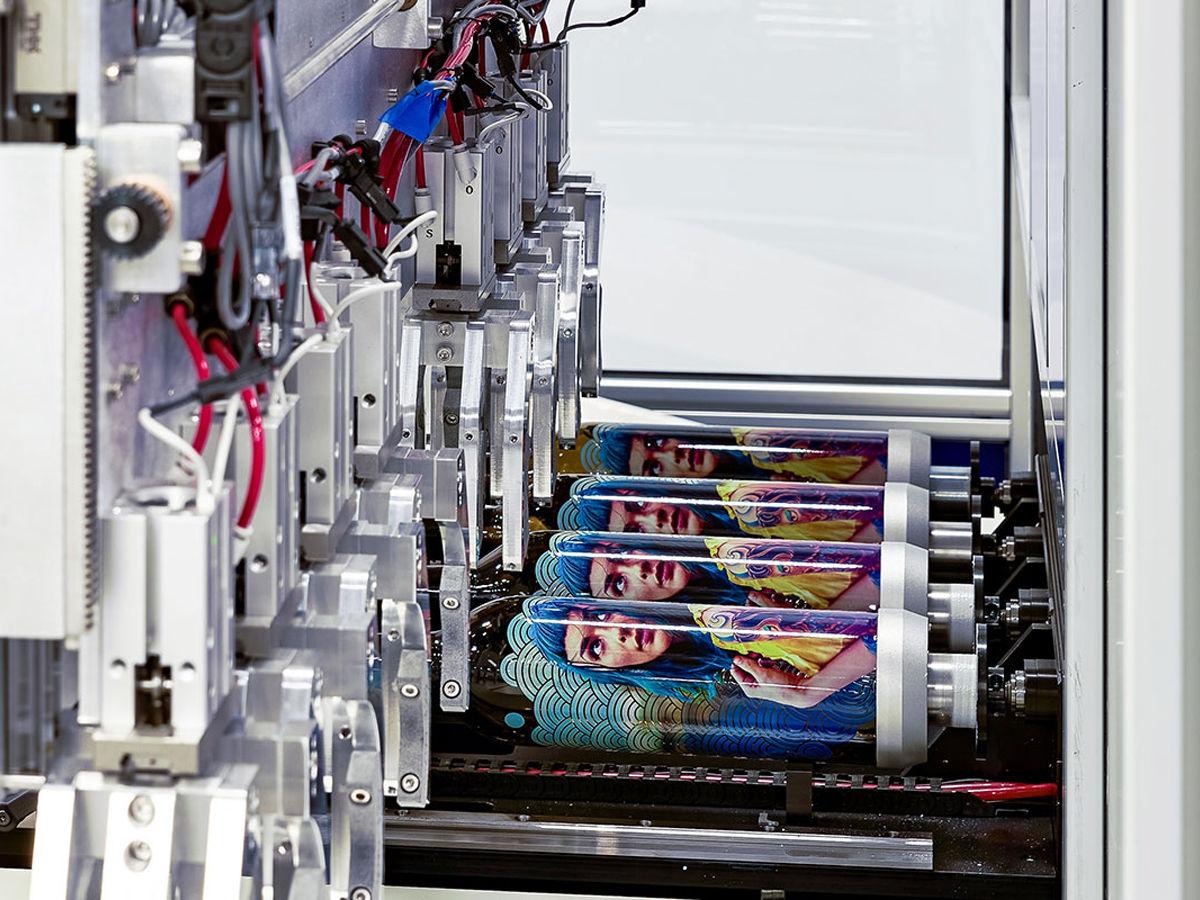
Digital direct-to-object changeover
- Load the next artwork file
- Swap the fixture only if the shape changes
- Every color comes from the same ink set
- Verify the first piece, then run
Design changeovers out of the product family
- 01
Group SKUs by geometry
Products that share diameter, height and shape can share a fixture. Sequence jobs so shape changes happen least often.
- 02
Use adjustable or family fixtures
One fixture that covers a size range with a quick setting beats a shelf of single-use fixtures.
- 03
Keep artwork in a library
Store approved, print-ready files with their settings so reruns load in seconds and match the last run.
- 04
Standardize the ink set
When jobs share one ink set, color changes stop being changeovers.
Changeover scorecard (fill in with your own numbers)
- Last good piece to first good piece
- Minutes, measured on real jobs
- Changeovers per shift
- Count
- Internal steps (line stopped)
- List and time each
- External steps (line running)
- List and time each
- Test pieces scrapped per changeover
- Count and cost
- Capacity lost per week
- Changeover minutes × changeovers per week
Questions buyers ask
What is a good changeover time for product decoration?
There is no universal number. The useful benchmark is your own: measure last good piece to first good piece today, then track it after each improvement.
What is SMED?
Single-Minute Exchange of Die, a lean method for cutting changeover time by moving work off the stopped line, simplifying adjustments and standardizing the steps.
Does digital printing eliminate changeover?
It removes most tooling and color changes, because the artwork is a file. Shape changes may still need a fixture swap, so fixture design and job sequencing still matter.
How does changeover time affect cost per piece?
Changeover time is paid for by the pieces in the run, and the shorter the run, the bigger that share. See our guide to true cost per decorated piece.
Can fixtures be designed for fast changeover?
Yes. Locating features, quick-release clamps and family fixtures that cover a size range all shorten swaps. LSINC engineers design fixturing and motion as part of its printing systems.